How a geek saves himself from drowning...

From its first publication in 1858 and well into the 20th Century, for answers to the common questions of everyday life many people referred to the handy reference book Enquire Within Upon Everything first published by Houlston and Sons of London. The 1905 front page declares "Whether You Wish to Model a Flower in Wax; to Study the Rules of Etiquette; to Serve a Relish for Breakfast or Supper; to Plan a Dinner for a Large Party or a Small One; to Cure a Headache; to Make a Will; to Get Married; to Bury a Relative; Whatever You May Wish to Do, Make, or to Enjoy, Provided Your Desire has Relation to the Necessities of Domestic Life, I Hope You will not Fail to 'Enquire Within.' "—Editor.
There were many editions over the years and I have in my possession the 1905, one hundred and second edition and the 113th edition dated 1923. These books were really popular at the time and can still be found in second-hand bookshops in the UK. Many items, to our 21st Century eyes just seem quaint and some others quite bizarre and I intend to quote a few in the blog from time to time.
For now here is the 1905 item: Dr Clark’s Pills for Nervous Headaches. – Socotrine aloes, powdered rhubarb, of each one drachm; compound powder of cinnamon, one scruple; hard soap, half a drachm; syrup enough to form the mass. To be divided into fifty pills, of which two will be sufficient for a dose; to be taken occasionally. By the 1923 Edition the Headache item starts: Aspirin…is prescribed as an anti-rheumatic remedy and for relief of headaches and other pains. It should be taken only under the supervision of a medical man.
And here, now don’t even think to use this if the occasion arises, is the 1905 treatment for Drowning: “Attend to the following essential rules: -
1. Lose no time.
2. Handle the body gently.
3. Carry the body face downwards with the head gently raised, and never hold it up by the feet.
4. Send for medical attention immediately, and in the meantime act as follows
5. Strip the body, rub it dry; then wrap it in hot blankets and place it in a warm bed in a warm room.
6. Cleanse away the froth and mucus from the mouth.
7. Apply warm bricks, bottles, bags of sand &c., to the armpits, between the thighs and to the soles of the feet.
And so the article goes on….and finishes with: Cautions: Never rub the body with salt or spirits. Never roll the body on casks. Continue the remedies for twelve hours without ceasing.

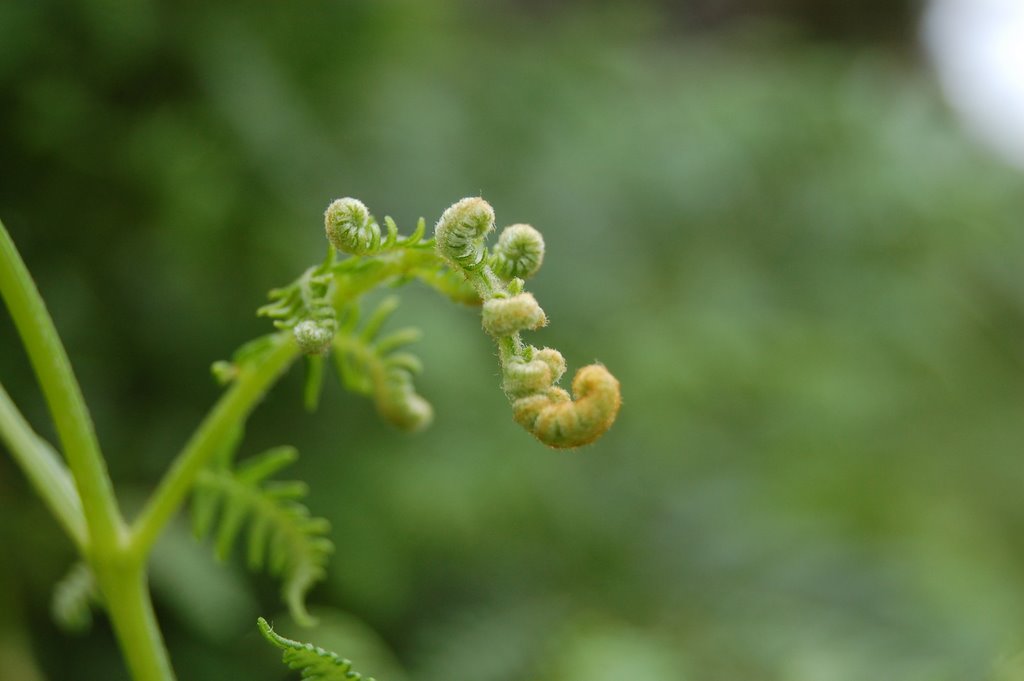




 Sheep on the Bryn - Shropshire/ Welsh Border Country.
Nothing to do with sheep, but I'm probably in for something bad to happen this week! You probably don't want to know this, but I cut my fingernails last Sunday and have just read the following old rhyme!
When to Pare the Nails
Wish me luck!
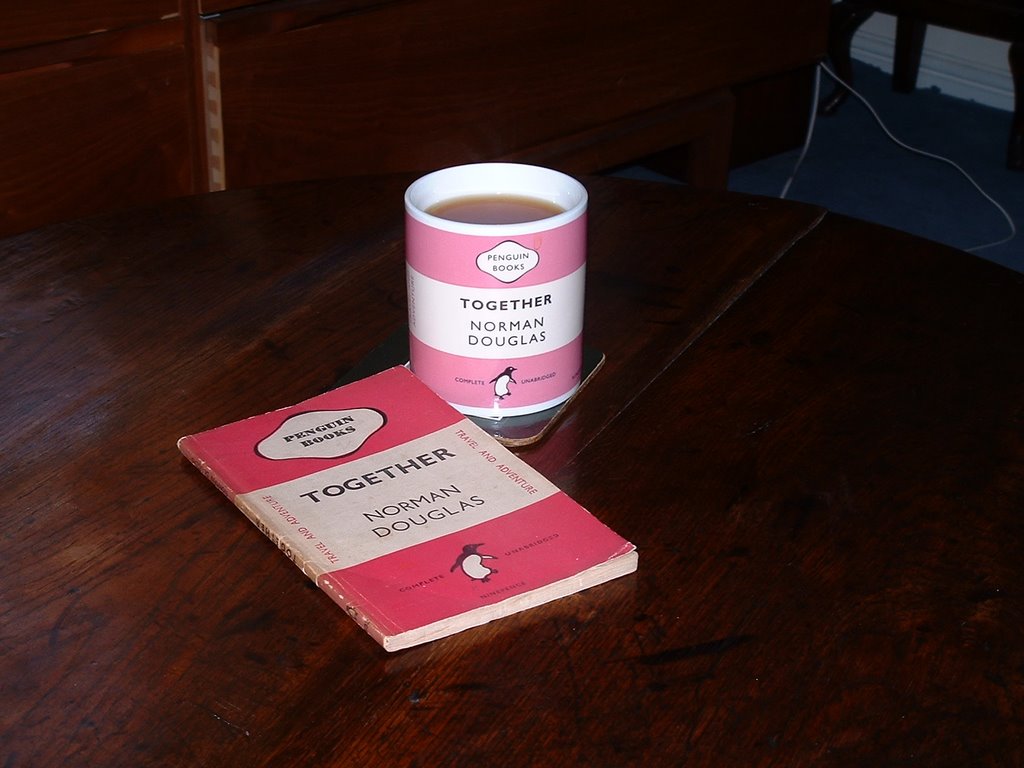
I've bought a new mug!
When Penguin first published their books in 1935, they had very plain covers for the instantly popular and cheaply priced paperbacks. For many years (off and on) I have been collecting "Pink Penguins", officially Cerise, which denoted Travel & Adventure. The main other colours were Green for Mystery & Crime and Orange for Fiction, though Penguin No.1 was Dark Blue for Biography: Ariel (A life of Shelley) by Andre Maurois.
By the late 1950's plain covers gave way to pictures but still with a penguin in a cerise background on the spine, then by the mid-1960's the familiar penguin logo was all that remained; colour coded no longer. My collection started many years ago with the two volume edition of Apsley Cherry-Garrard's The Worst Journey in the World which led me to an enduring interest in polar exploration. I now have a nearly complete set of the Travel & Aventure Penguins and many other Polar books in my collection.
Together is interesting. Published first in hardback in 1923 (Penguin Edition No 502 in 1945) Norman Douglas has a companion "Mr R." which, unknown to the general reader, was actually a 15-year-old Italian, René - Douglas was 55 by then, though the book is not in any way overtly homosexual; that would have been impossible to publish in Britain at that time. It is an account of their travels in Austria. In another of his books Fountains in the Sand he travels to Tunisia which he portrayed as formerly prosperous in the days of the ancient empires, but at the time of his visit in 1912 sadly decayed, due in Douglas's view to the "fatalism of Mahomet and his religion".
I for one wish the England team well, but confess to be less than enthusiastic about the month long event. As British, (Welsh and English ancestry) and with a sponsored child in Paraguay I have mixed allegiances. Wales did not qualify and Paraguay play England in their first round match tomorrow.
I am sure that sportsmanship prevails between all the teams now assembling in Germany, but I fear that English supporters may let us all down. Thousands are on the way to Germany or are planning football watching sessions in their local pubs throughout this country and a significant number of so called supporters will be spoiling for a fight at the slightest opportunity. Let us all hope that the tournament will be a great and memorable one for all the right reasons.

The River Wye near Symonds Yat.
Another beautiful sunny morning here in Bristol. It's a shame I have to go into work, but there it is.
I'll drive there as I still have the lingering symptoms of a cold but that is the only excuse for not cycling to work this week. Maybe next!

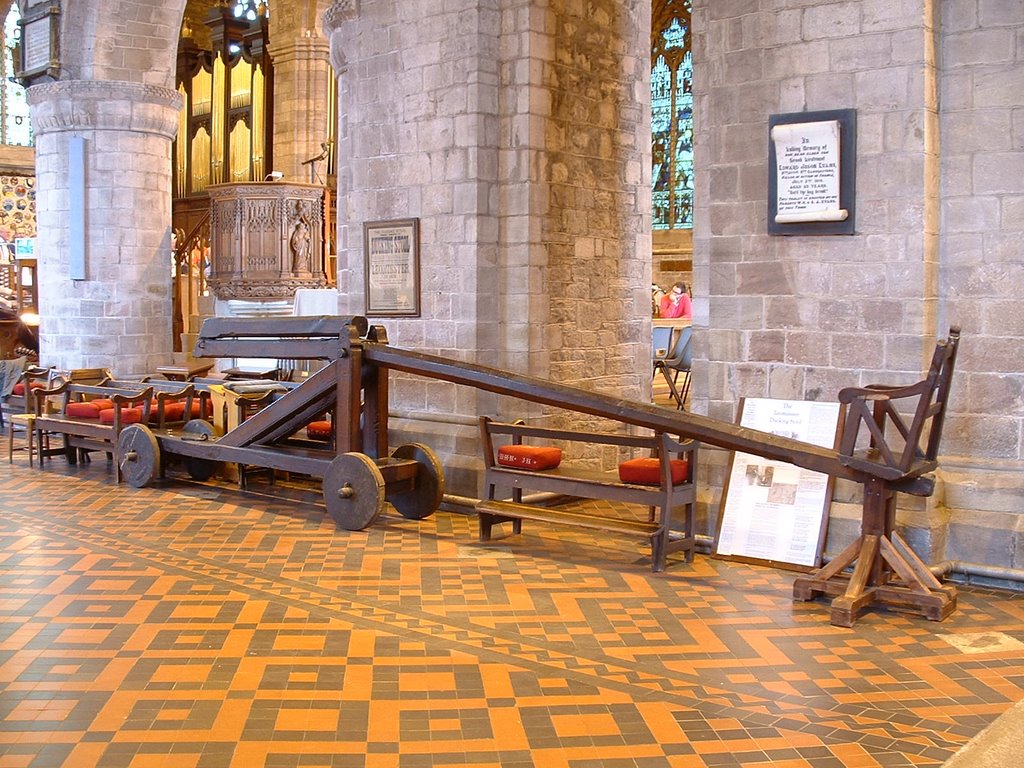 This is the famous ducking stool used for punishing rogue market traders, witches and it seems anyone who transgressed accepted behaviour. It is kept at Leominster Priory Church and was last used in 1809. Here is a link to Crime and Punishment in Herefordshire